

Tucked high in the rugged mountains of northern Ethiopia’s Tigray region lies one of the world’s most extraordinary places of worship — Abuna Yemata Guh. This 5th-century rock-hewn church combines breathtaking natural beauty, daring human craftsmanship, and deep spiritual significance in a way that few destinations in the world can match. Perched atop a 2,500-meter (over 8,200 feet) sandstone pinnacle, the church is carved directly into the cliff face and remains one of Africa’s most remarkable feats of early Christian architecture.
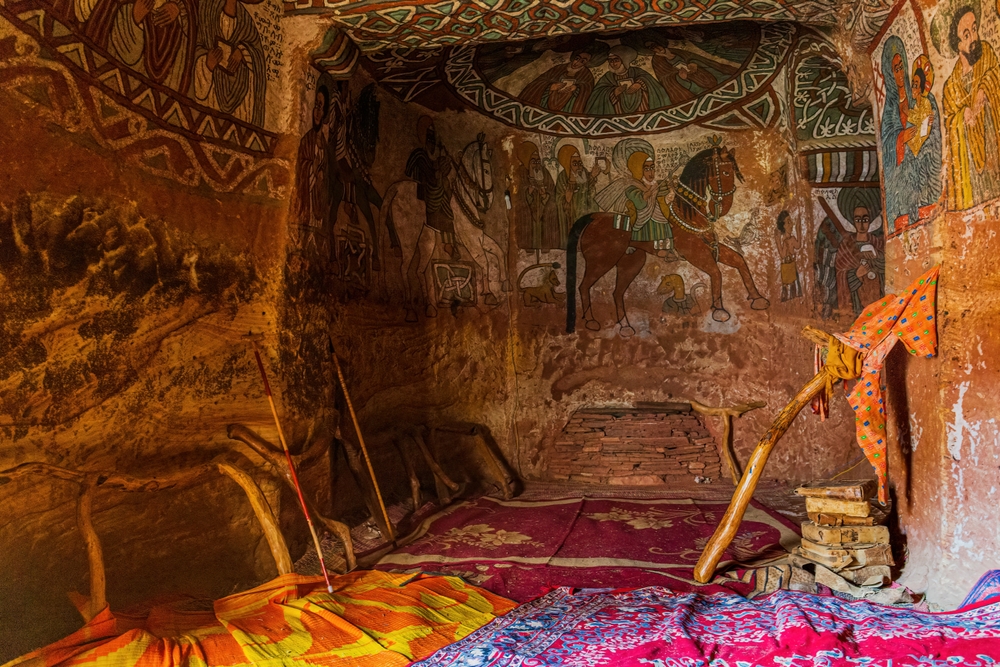
Abuna Yemata Guh, Hawzen, Tigray, Ethiopia
Abuna Yemata Guh is named after Abuna Yemata, one of the Nine Saints who are credited with bringing Christianity to Ethiopia from the Byzantine Empire in the 5th century. These saints spread monasticism and religious teachings across the region, leaving a legacy that continues to shape Ethiopia’s Orthodox Christian traditions today. Legend has it that Abuna Yemata himself carved the church out of the rock using only rudimentary tools, guided by his unshakable faith and vision. The fact that the structure still stands intact today is a testament to both its builders’ skill and the devotion that has preserved it through centuries of isolation and reverence.
Reaching Abuna Yemata Guh is a pilgrimage in its own right, one that strips away the comforts of modernity and rewards visitors with not just awe-inspiring views, but a profound sense of accomplishment. The journey begins in the small village of Guh, followed by a demanding hike that puts both physical endurance and nerve to the test.
Pilgrims and adventurous travelers must navigate a steep, winding trail that often becomes a scramble over boulders and narrow, wind-whipped ledges carved into the mountainside. In some stretches, visitors rely on hand-holds and footholds burned into the rock over centuries of use, with local guides often offering barefoot assistance along the tougher parts. It’s not uncommon for visitors to ascend barefoot themselves, mirroring the devotion and humility of past centuries.
You Might Also Enjoy: Offbeat Travel: The Pirate Cemetery in Madagascar
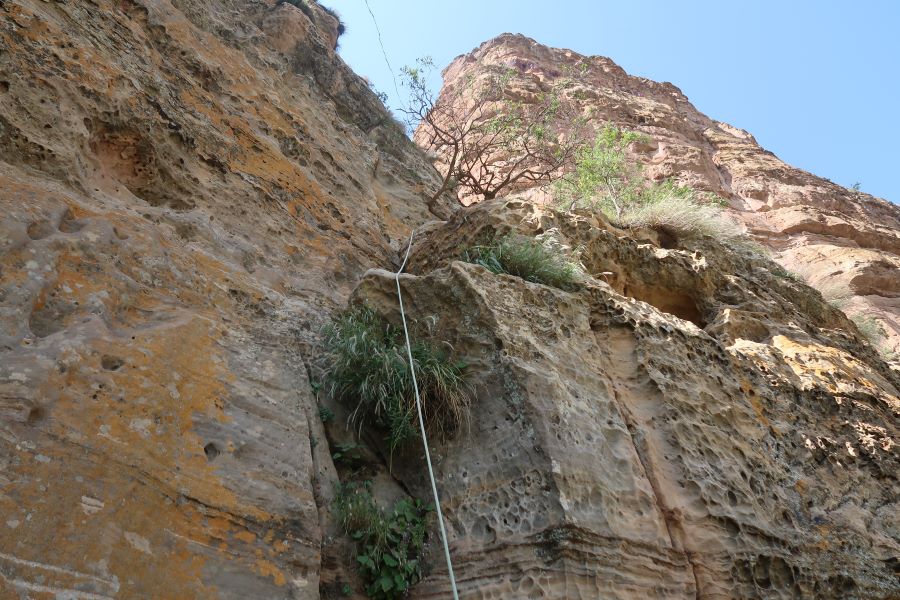
Abuna Yemata Guh, Tigray, Ethiopia
The final approach involves crossing a narrow cliff edge with sheer drops on either side, before scrambling up a vertical rock wall with makeshift rope supports — a daunting climb that has earned the church a reputation as the “world’s most dangerous place of worship.” And yet, despite — or perhaps because of — this perilous path, those who make the ascent enter a space of stunning tranquility and beauty.
Inside, Abuna Yemata Guh greets visitors with vibrant frescoes that have survived over 1,500 years. These delicate paintings, rendered in organic pigments, depict familiar biblical scenes, apostles, angels, and members of the Nine Saints. Remarkably well preserved due to the dry climate and the church’s isolation, the murals provide a rare, vivid glimpse into the theology and artistry of early Ethiopian Christianity.
Abuna Yemata Guh represents a faith tradition that has endured for over a millennium. The church remains an active place of worship, with local believers climbing the same arduous route for baptisms, weddings, and religious holidays. For travelers seeking an offbeat spiritual experience, few destinations can rival the timeless majesty and soul-stirring drama of Abuna Yemata Guh.
Have you ever made the perilous climb to Abuna Yemata Guh? Tell us about it in the comments below!
Leave a Reply